

What the New Suppressor Ruling Actually Means for Gun Owners

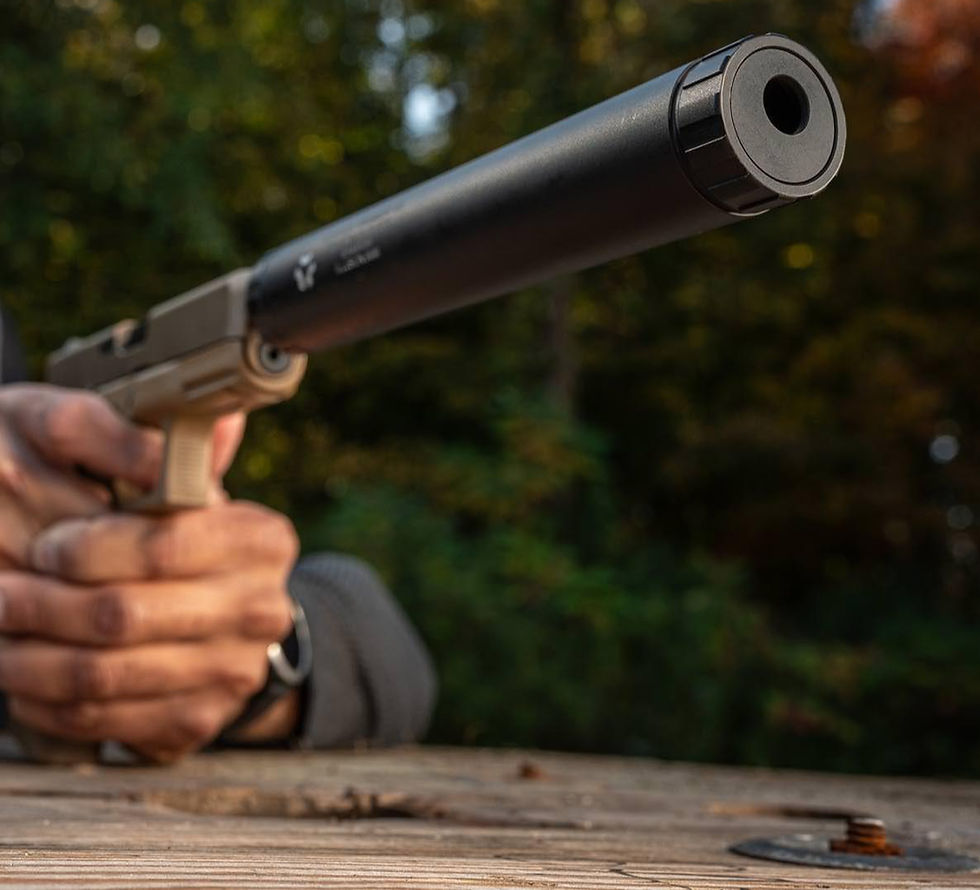
If you've been anywhere around the firearm community lately, you've probably seen some pretty dramatic headlines:
“The NFA is dead.”
“Suppressors are now over the counter.”
“No more Form 4.”
There is a major change happening in the suppressor world—but the truth is more complicated than a lot of social-media posts make it sound.
And considering how significant the recent changes could be for American gun owners, it's worth separating what has actually happened from what hasn't.
Suppressors Were Already the Biggest Firearm Trend of 2026
Even before the latest court ruling, suppressors were having a remarkable year.
Beginning January 1, 2026, the federal National Firearms Act making and transfer tax for suppressors and several other NFA-regulated categories was reduced from the historic $200 amount to $0.
That removed one of the biggest financial annoyances associated with suppressor ownership.
At the same time, suppressors had already become increasingly mainstream among recreational shooters, hunters, firearm instructors and people concerned about reducing exposure to muzzle blast.
The National Shooting Sports Foundation reported in July that suppressor sales were booming, driven in part by the $0 NFA tax and faster electronic processing.
But then something much bigger happened.
The August 2026 Federal Court Decision
On August 5, 2026, a federal judge in the Northern District of Texas issued a significant ruling in Silencer Shop Foundation v. ATF.
The basic legal issue was unusual.
For decades, much of the National Firearms Act's regulatory structure was connected to Congress's power to impose and collect a tax.
Congress had now reduced the making and transfer tax on suppressors and certain other NFA items to $0.
The plaintiffs argued that if there was no longer a meaningful tax being collected, the federal government could no longer rely on its taxing power to justify the accompanying registration and approval system.
The court agreed with that argument regarding the challenged provisions.
That is a major development.
But this is where some of the headlines start getting ahead of the actual decision.
Did the Court Completely Eliminate the NFA?
No.
That is probably the single most important thing firearm owners should understand.
The ruling did not simply erase the National Firearms Act nationwide.
The court issued a permanent injunction preventing federal officials from enforcing the challenged provisions against the plaintiffs and, where applicable, their members and customers.
It specifically declined to issue a nationwide injunction covering every gun owner, every suppressor dealer and every transaction in America.
So when you see someone post that “the NFA has been completely repealed,” that isn't an accurate description of what happened.
The ruling is nevertheless one of the most significant challenges to the NFA's regulatory structure in decades.
What Changed for Suppressor Buyers?
For transactions covered by the court order, the change can be enormous.
Silencer Shop's current guidance states that qualifying suppressors originating through Silencer Shop or participating dealers can be transferred without the traditional NFA Form 4 registration process in certain states covered by its procedure.
That means qualifying customers may no longer have to:
Pay a $200 NFA transfer tax — that tax had already been reduced to $0 nationally.
Wait for traditional NFA Form 4 approval.
Complete the traditional NFA registration process for covered transactions.
Normal federal firearm laws have not simply disappeared, however.
Depending on the transaction, ordinary federal dealer requirements and background-check requirements can still apply.
State law also remains extremely important.
Suppressors remain prohibited or restricted in some jurisdictions regardless of what happens to the federal NFA process.
What About Indiana?
For Indiana gun owners, this story is particularly interesting.
Indiana is currently listed by Silencer Shop among the states where suppressors covered by its court order can be treated under the ordinary Gun Control Act process rather than the traditional NFA Form 4 process.
In a qualifying transaction, that can make purchasing a suppressor look dramatically different from the process gun owners became accustomed to over the past several decades.
That does not mean an Indiana resident should assume that every suppressor from every manufacturer, seller or dealer can automatically be purchased without the NFA process.
The scope of the court order and the parties covered by it matter.
If you're purchasing a suppressor, confirm the current procedure with the dealer handling the transaction before assuming a particular process applies.
What About Short-Barreled Rifles?
This is another area where internet discussions can become misleading.
The court case addressed more than just suppressors, but an SBR purchased from a dealer presents additional federal-law considerations.
Silencer Shop's current guidance says dealer-transferred SBRs and short-barreled shotguns still require Form 4 processing because separate provisions of the Gun Control Act remain relevant to those transfers.
So:
Suppressor ≠ SBR.
Don't assume that because a suppressor transaction may now avoid the traditional NFA registration process under the court order, every other formerly taxed NFA category follows exactly the same procedure.
Why Suppressors Have Become So Popular
The legal developments are making headlines, but they aren't the only reason suppressors are growing.
Suppressors have become increasingly attractive because they address something every shooter encounters:
noise and muzzle blast.
Despite what movies sometimes suggest, a suppressor does not normally turn a firearm into a nearly silent device.
A firearm can remain extremely loud even when suppressed.
What a suppressor can do is reduce muzzle blast and sound pressure, which can make shooting considerably more pleasant and can supplement—not necessarily replace—appropriate hearing protection.
Suppressors can also reduce perceived blast around other shooters on a firing line.
For hunters, instructors and high-volume recreational shooters, those benefits can be especially attractive.
The Firearm Industry Is Responding
When consumer demand changes, manufacturers follow it.
We're seeing more firearms designed from the beginning around accessories that once seemed specialized.
Threaded barrels have become common.
Suppressor-height sights are readily available.
Optics-ready pistols have moved from specialty products to mainstream concealed-carry guns.
Red-dot adoption has also risen dramatically. Industry retail data reported by NSSF showed red-dot sales in 2025 were more than double their 2019 level.
Put all of these trends together and the modern handgun is becoming increasingly modular.
A shooter might start with a compact handgun and eventually add:
A red-dot optic
A weapon-mounted light
A threaded barrel
A suppressor for range or home-defense use
Different grip modules or controls
A holster specifically configured around the carry setup
That last part matters more than many new gun owners realize.
The Holster Industry Is Changing Along With the Gun
At Indy Concealment, this is the part of the trend we watch particularly closely.
Modern handgun configurations have become far less standardized.
Twenty years ago, knowing the make and model of a handgun could often tell a holster maker most of what they needed to know.
Today, two people carrying the exact same pistol may have completely different setups.
One may carry factory iron sights.
Another may have a red dot.
Another may use a weapon-mounted light.
Another may have an aftermarket slide or compensator.
That means holster compatibility matters more than ever.
A quality holster needs to match the actual firearm configuration—not simply the name stamped on the slide.
Suppressors Probably Won't Change Everyday Concealed Carry the Way Red Dots Did
It is also important to keep this trend in perspective.
We don't expect suppressors to suddenly become normal accessories for everyday concealed carry.
For most people, adding several inches to the muzzle of a concealed handgun simply isn't practical.
Where suppressors may have a much larger impact is on:
Home-defense handguns
Range pistols
Training pistols
Hunting firearms
Pistol-caliber carbines
Short-barreled rifles
General recreational shooting
That could still indirectly affect the holster industry.
Shooters increasingly want equipment that works with several different firearm configurations, and holster manufacturers will have to continue adapting to optics, lights, compensators, threaded barrels and other accessories.
Is the Legal Fight Over?
Almost certainly not.
One federal district court decision does not end nearly a century of firearm regulation throughout the country.
Future litigation, additional court decisions, legislation or agency guidance could change how the ruling is applied.
And different states continue to have their own firearm and suppressor laws.
That is why gun owners should be cautious about treating a viral post, YouTube thumbnail or Facebook comment as legal advice.
The most responsible approach is to verify the current law and purchasing procedure at the time you're actually making a transaction.
What This Could Mean for the Firearm Industry
If suppressors continue becoming easier and less expensive to acquire, the ripple effects could be considerable.
We may see:
More suppressor-ready handguns and rifles. Manufacturers have even more incentive to offer threaded barrels and suppressor-compatible configurations from the factory.
Greater competition among suppressor manufacturers.A larger potential customer base generally attracts additional manufacturers, designs and price competition.
More first-time suppressor owners.Shooters who previously decided the paperwork, $200 tax and wait weren't worth the trouble may reconsider.
Continued growth in accessory-driven firearms.Suppressors join optics, weapon lights and compensators as another component of the increasingly modular firearm market.
More emphasis on configuration-specific gear.As firearms become more customized, choosing compatible holsters and accessories becomes increasingly important.
The Bigger Picture
Whether someone supports the court's decision or opposes it, there is no denying that the suppressor market is undergoing one of the biggest changes it has experienced since the National Firearms Act was enacted in 1934.
The $200 federal tax has already disappeared for suppressors.
A federal court has now rejected enforcement of major NFA registration provisions against the plaintiffs and covered parties in the case.
And suppressor demand was booming even before that ruling took effect.
That makes this far more than another temporary gun-industry trend.
It may be the beginning of a significant change in how American shooters view, buy and use suppressors.
But the story is still developing.
And for now, the most accurate headline isn't:
“The NFA is dead.”
It's:
“The suppressor landscape just changed dramatically—and we're only beginning to see what comes next.”
A Note From Indy Concealment:
At Indy Concealment, we follow changes in firearms, concealed carry and everyday-carry equipment because those changes directly affect what gun owners expect from their gear.
Whether you're carrying a basic factory handgun or a modern optics-equipped setup, our philosophy remains the same:
Your holster should provide secure retention, practical concealment and dependable performance without costing a fortune. Precision. Comfort. Confidence.
Are suppressors legal in the United States?
Suppressors are legal to own under federal law when the purchaser is otherwise legally eligible, but state and local laws can impose additional restrictions or prohibitions. Always verify the laws where you live before purchasing or possessing a suppressor.
Is the $200 suppressor tax stamp gone in 2026?
The federal making and transfer tax for suppressors was reduced from $200 to $0 beginning January 1, 2026. However, a $0 tax does not automatically mean that every federal registration, transfer or dealer requirement has disappeared.
Do I still need an ATF Form 4 to buy a suppressor?
It depends on the transaction and whether it is covered by the recent federal court ruling. Some qualifying transactions covered by the court order may proceed differently from the traditional Form 4 process. Other suppressor transactions may still follow ATF's normal NFA procedures.
Because this situation is developing, buyers should confirm the current procedure with the dealer handling their suppressor purchase.
Did the August 2026 court ruling eliminate the National Firearms Act?
No. The ruling did not repeal the entire National Firearms Act nationwide.
It restricted enforcement of certain challenged NFA provisions against the plaintiffs and covered parties. The court did not simply erase the NFA for every firearm owner and dealer in the United States.
Can I walk into a gun store and buy a suppressor over the counter now?
Not necessarily.
Certain qualifying transactions covered by the recent court order may allow suppressors to be transferred without the traditional NFA Form 4 process. That does not mean every dealer, every suppressor and every purchaser nationwide can automatically complete an ordinary same-day purchase.
Federal firearm laws, dealer requirements, background checks and applicable state laws can still apply.
Can Indiana residents buy suppressors without waiting for a Form 4?
Certain qualifying Indiana suppressor purchases covered by the recent court order may proceed without the traditional NFA Form 4 process.
However, Indiana residents should not assume that every suppressor transaction is automatically covered. Confirm the current process with the dealer handling your purchase before relying on a particular transfer procedure.
Are suppressors completely silent?
No. Despite what movies and television often portray, suppressors do not ordinarily make firearms silent.
They reduce muzzle blast and sound pressure, but a suppressed firearm can still produce potentially hazardous noise. Appropriate hearing protection may still be necessary.
Are short-barreled rifles treated the same way as suppressors?
No.
Even though recent changes to NFA taxation and litigation involve multiple categories of NFA firearms, short-barreled rifles can be subject to additional federal requirements that differ from suppressors.
Do not assume that a change affecting a suppressor purchase automatically applies to an SBR.
Do I need a special license to own a suppressor?
Generally, an ordinary individual does not need a special federal firearms license simply to legally own a suppressor.
However, the purchaser must comply with the federal, state and local laws applicable to the particular transaction and location.
Could the suppressor rules change again?
Yes.
The current legal landscape is still developing. Additional court rulings, appeals, legislation, agency guidance or regulatory changes could affect how suppressors are purchased and transferred.
For that reason, firearm owners should verify current requirements before making a purchase rather than relying solely on older articles or social-media posts.
Where should I verify the current suppressor laws?
For federal requirements, consult current information from the Bureau of Alcohol, Tobacco, Firearms and Explosives and verify the current procedure with the licensed dealer handling your transaction.
State and local firearm laws should also be checked separately.
This FAQ is provided for general informational purposes only and is not legal advice. Firearm laws and procedures can change and may vary by jurisdiction.
This article is provided for general informational purposes only and is not legal advice. Firearm and suppressor laws can change quickly and vary by jurisdiction. Always verify current federal, state and local laws before purchasing, possessing or transferring regulated firearms or accessories.


Comments